
Portrait: Eric Saint Plancat, Captain of the Exploris One
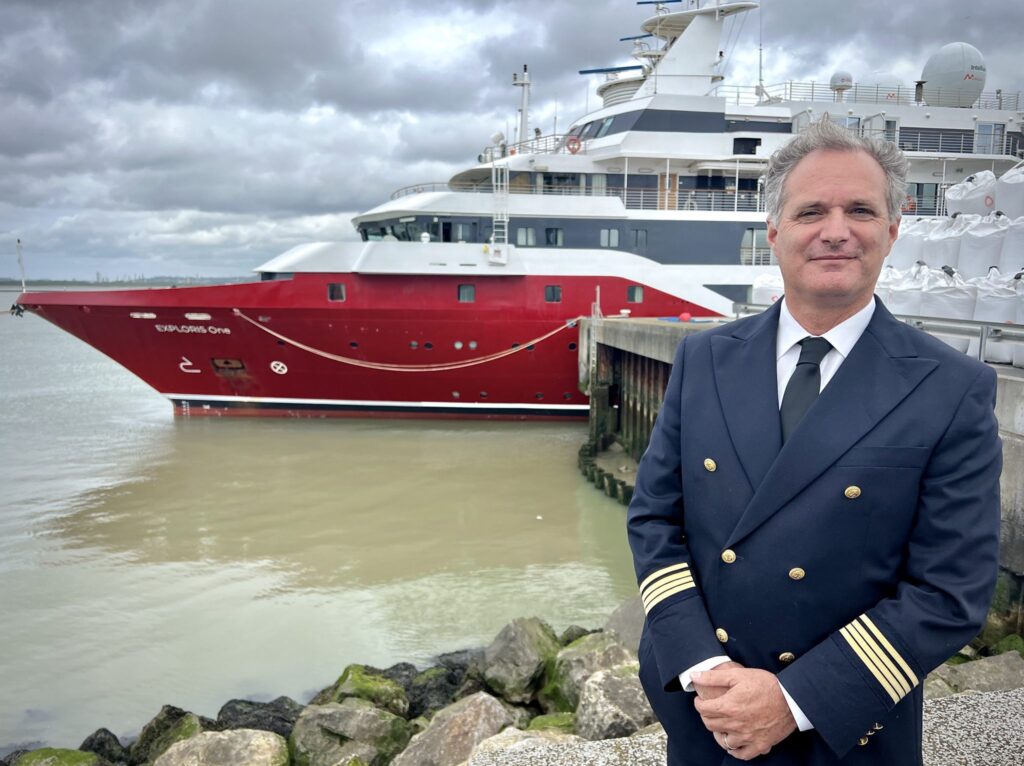
We met him aboard the Exploris One last May. After six months sailing in Antarctica and then Macaronesia, the first ship belonging to the Nantes-based company Exploris made a stopover in Honfleur, with Captain Saint Plancat at the helm.
Eric Saint Plancat began sailing as a skipper in 1991 after what he describes as a revelation. "My vocation revealed itself to me at the age of eighteen, almost by accident. I didn't yet know what I wanted to do with my life. I was studying political science in Paris, and it wasn't going well. But it led me, by chance, to the boat show,” he recalls. "That's where I realized there were people paid to take passengers on sailboats around the Caribbean islands. It was a shock. I said to myself, 'That's what I want to do.'"
Eric Saint Plancat began a maritime career driven by his love of boats. "I love anything that floats and goes on the sea. Whether they have sails or engines, wether they carry goods or passengers.” After dropping out of preparatory school, he obtained his skipper's license. "I convinced my parents that I was called to be a sailor. They supported me, and that's how I got my yacht master certificate. When you're eighteen and have a dream, that's enough. I could already see myself sailing as a skipper for the rest of my life!” he says. "But fortunately, my parents pushed me to go further. They said, 'You've found your calling. We'll help you, but you have to see it through to the end.'"
Eric Saint Plancat joined the Maritime Academy in 1992. "I then began alternating between sailing ships and commercial vessels, first as a cadet and then as a watch officer. Occasionally, I returned to skippering larger sailing yachts." He describes this experience as excellent training. "I quickly learned how to maneuver boats, even though they were much smaller than the ships I command today. Being a skipper means having total responsibility for a boat, its crew, and its passengers."
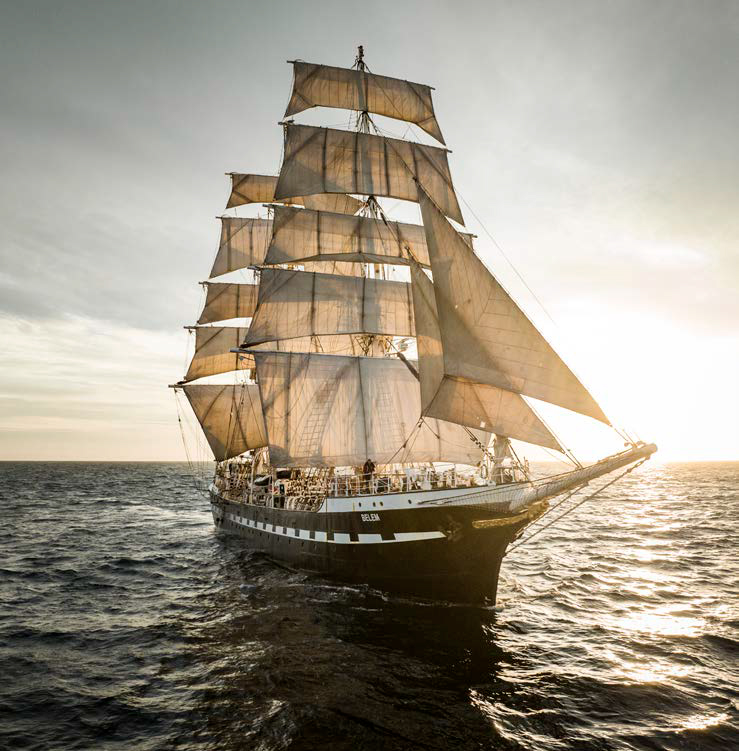
Bulk and general cargo carriers, sailing yachts, passengers ships... In three decades of sailing, Captain Saint Plancat has worked on over thirty ships. “For a passionate sailor, boats are almost like people,” he says. "In English, we refer to them as 'she,' with great respect. We always feel very attached to all the boats we sail on." Among these ships, some have left a special mark on him: first and foremost, the three-masted bark Belem.
"My dream was simply to set foot on board one day. I far exceeded that since I rose through the ranks and commanded her for three seasons, from 2003 to 2005," he says proudly. "It's not only because she is beautiful and prestigious, but also because of everything she teaches a sailor about life at sea." Just in terms of maneuvering: "I was passionate about sailing, but I had no idea how square rigging worked. I learned everything on board the Belem.” He describes it as a lesson in humility above all else. "When you board the Belem, you realize how people sailed a hundred years ago. There were only thirteen crew members, and obviously, there was no engine, GPS, or radar. They sailed across the ocean entirely under sail. Today, we sail with modern means, and that's great, but we shall not forget how it all began," he concludes.
The second ship he describes as remarkable is the polar opposite of the Belem. The Douce France was the largest sailing catamaran in the world. "I don't find catamarans very beautiful in general. They have lots of technical advantages, but they're funny-looking creatures on the water,“ he says. ”The Douce France is really an exception to the rule, because she's gorgeous. Very long, very narrow, with an elegant schooner rigging." The Douce France was the first major ship that Eric Saint Plancat commanded. ”I was given responsibility for this floating beauty at the age of twenty-six, which was almost absurd!" he jokes. "I was very young and looked even younger. People thought I was a deckhand when I greeted them on board. But it was three years of wonderful experience between the Caribbean and the Mediterranean."

We met Eric Saint Plancat aboard the third of these ships. "The Exploris One is a ship I am very fond of. I already have some history with her," he says, recalling some powerful memories. With no particular attachment to traditional cruising, the captain of the Exploris One expresses his passion for expedition cruising. “It's an environmentally friendly type of cruise, with small ships that are designed and equipped with respect for the environment. But above all, our passengers come for the destination, not the ship. They don't come to party, play at the casino, or go down water slides: they come to discover the beauty of the world.”
Built in 1989, the Exploris One is an old expedition ship. "We are aboard a ship with a soul and a history, and we are going to experience it. These are ships that have proven themselves and sailed all the world's seas. This is certainly true of the Exploris One. I don't know how many miles she has traveled in her thirty-five years of floating existence, but it must be a staggering number. She has traveled from the far north to the far south and from east to west, making several trips around the world," he says admiringly.
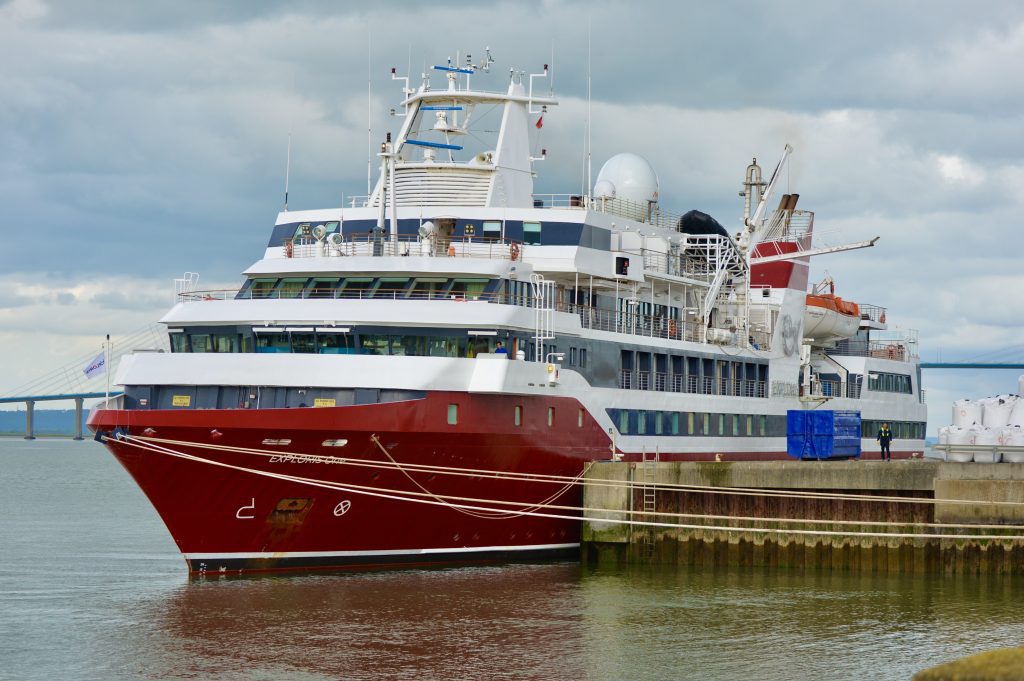
Despite his attachment to these ships, Captain Saint Plancat remains somewhat cautious about their preservation. “The downside is that old ships like the Exploris One require a lot of attention and maintenance,” he explains. “In the case of the Belem, if she has managed to stay afloat for 130 years, it's because she is taken out of service every winter and has undergone major renovations.” These are costly commercial constraints that are not always profitable. "The Belem is a monument to our maritime heritage, and we have a duty to maintain it. This is not the case for commercial vessels of any kind, even cruise ships: it would quickly become unmanageable and unprofitable.“ Not to mention the constant evolution of regulations: ”They are becoming increasingly strict and draconian. Old ships, which were not designed for this, cannot be adapted without making excessive investment. And this is even compared to investing in new ships, designed from the outset to comply with these standards."
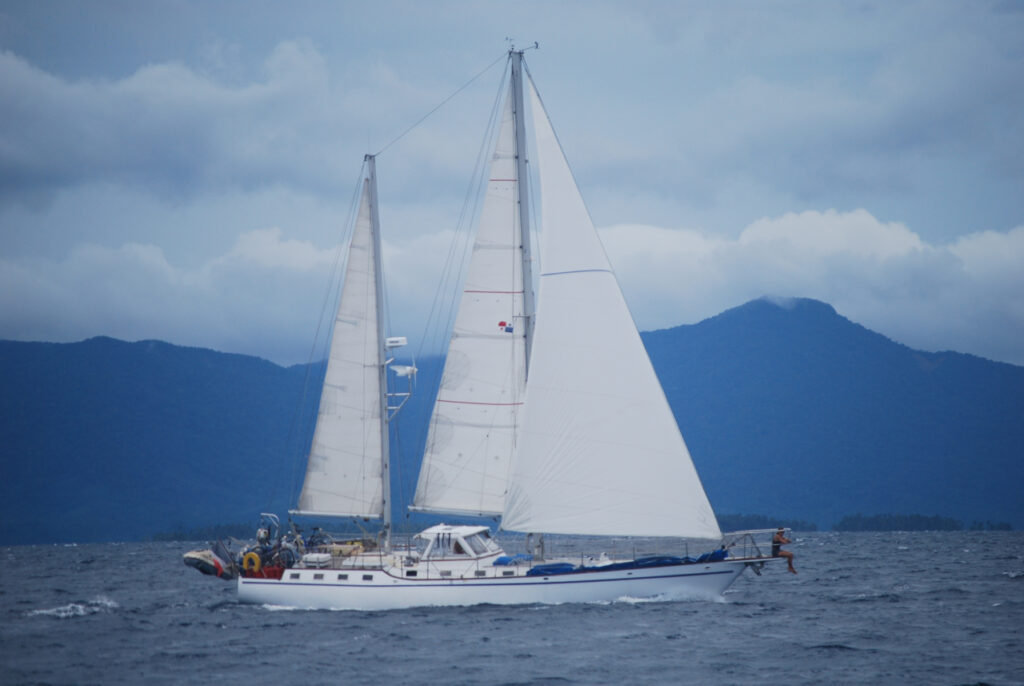
Among his most memorable experiences, Eric Saint Plancat counts the design of a new ship. "It was aboard the Douce France that I had the most important encounter of my life: that of Guy Laliberté, founder of the Cirque du Soleil. He brought me on board his personal project: he wanted to build a larger version of the Douce France," he explains. Although the project never came to fruition, he describes five exciting years spent at the drawing board, designing an exceptional ship. In 2005, Guy Laliberté abandoned the project and bought the Tiara, recruiting Eric as captain for what the latter describes as “seven years of professional happiness.” Alongside this sailing adventure, he embarked on his personal odyssey: ”At the same time, I took my family aboard our own sailboat, the Maritea. We didn't sail around the world—just halfway, from France to New Zealand—but it was a very long journey, a way of life,“ he describes. ”Fifteen years of life on board in total (including the New Zealand period) and ten years of travel, including three years in French Polynesia."
When Guy Laliberté parted ways with the Tiara, Eric Saint Plancat seized the opportunity to fulfill another dream. “I had always wanted to sail through the Antarctic ice one day,” he explains. "Through a series of extraordinary circumstances, life gave me that opportunity." After two voyages aboard Ponant's Le Soléal in 2018, he took command of Silversea's polar expedition ships: the Silver Cloud and Silver Explorer – now known as the Exploris One. “I also sailed extensively with this ship, from north to south,” he explains with emotion. “It was aboard the Silver Explorer that I reached the southernmost point of my career (68°S) and was able to take my children to Antarctica...”
Eric Saint Plancat describes his career path as being guided by his passion for the sea and boats. “I think I've had salt water running through my veins since childhood!” he says, surprised to have discovered this so late. “In my case, it was there even before I had any experience. That said, I also imagine that this passion can arise with the discovery of the profession.” The captain of the Exploris One recommends listening to yourself and following your own passion—whatever it may be.
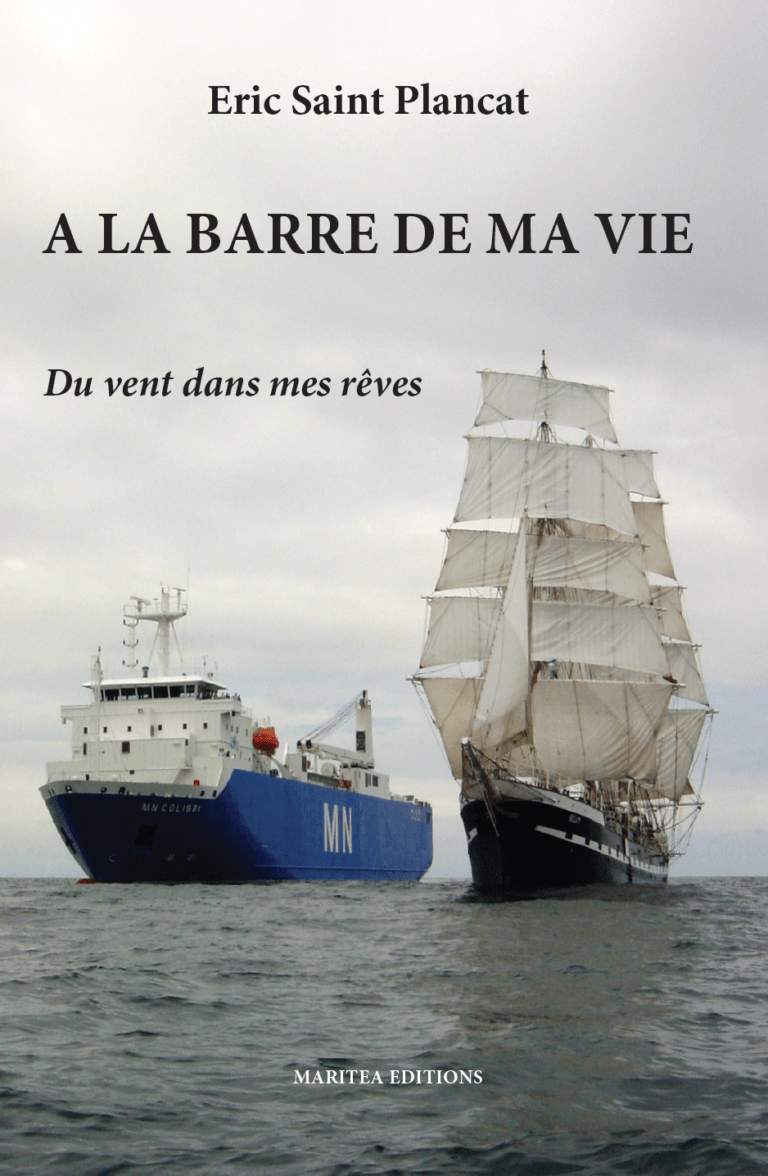
He recounted this extraordinary experience in a book entitled At the helm of my life, to share this life of passion.
 Français
  English (UK)